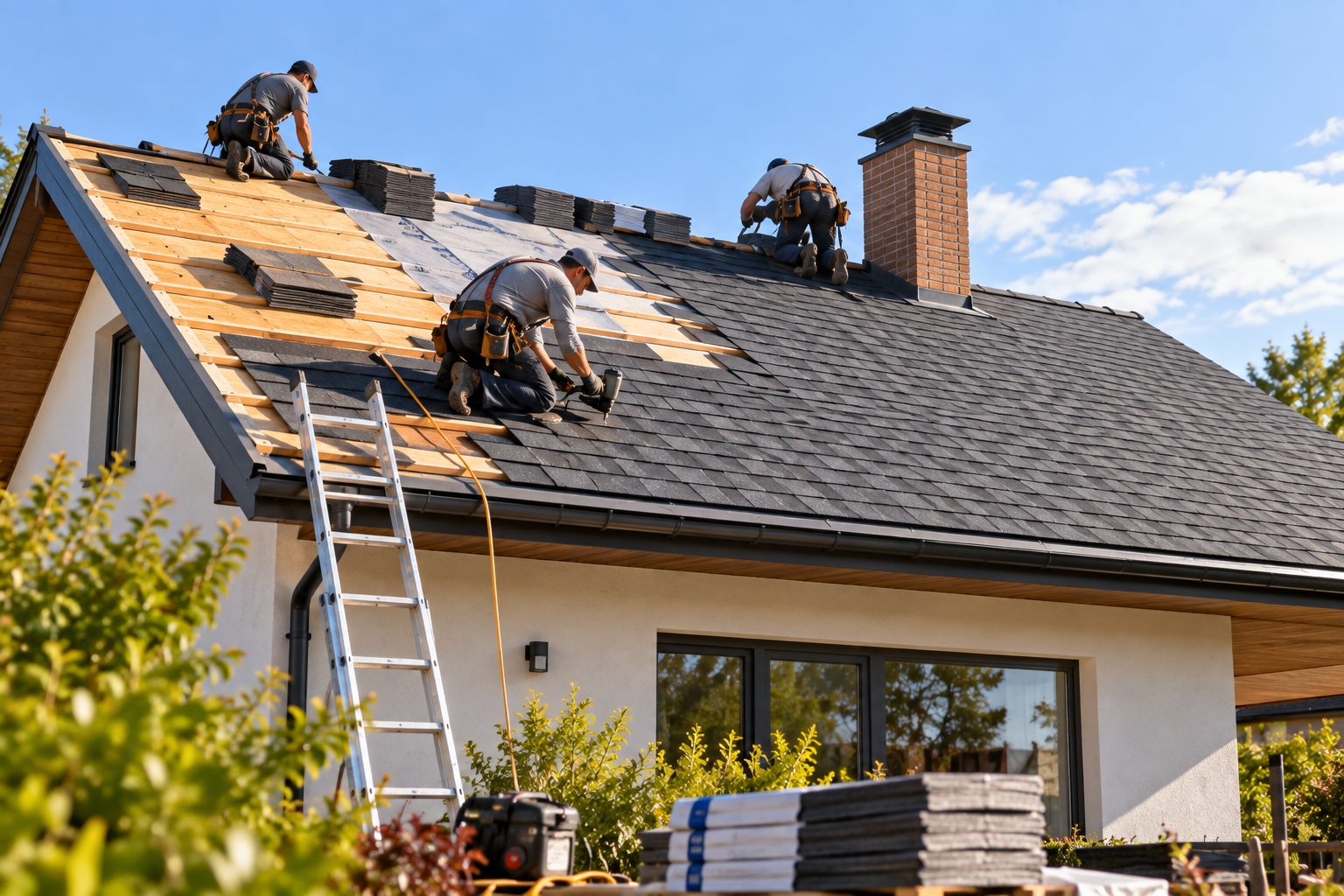
How often you replace a roof depends mainly on its material and condition. Many asphalt-shingle roofs last roughly 20–30 years, while metal roofs can remain serviceable for 40–70 years or longer, and tile or slate may last 50 years to well over a century.
Those numbers are planning ranges, not expiration dates. Installation quality, climate, ventilation, storms and maintenance can all change how long a specific roof lasts. Age tells you when to pay closer attention; the roof’s condition helps determine whether replacement is actually necessary.
How Often Should You Replace a Roof?
There is no single replacement schedule that works for every house.
A homeowner with asphalt shingles may begin thinking seriously about replacement after a couple of decades, while someone with a properly installed slate roof could be dealing with a roof covering designed to last many decades longer.
A useful starting point is:
| Roofing material | Typical lifespan / planning range |
|---|---|
| 3-tab asphalt shingles | About 15–25 years |
| Architectural asphalt shingles | About 25–30+ years |
| Wood shingles / shakes | Roughly 20–40 years |
| Metal roofing | Roughly 40–70+ years |
| Clay / concrete tile | Roughly 50–100+ years |
| Slate | Roughly 60–150+ years |
| Many low-slope membranes | Roughly 15–30 years |
These ranges should not be treated as guarantees. Individual products, roofing systems and manufacturer guidance vary, and a roof exposed to severe hail or poor ventilation may deteriorate much earlier than a similar roof in milder conditions.
Current GAF guidance likewise emphasizes that actual roof life depends on material, installation quality and location rather than one universal replacement interval.
GAF — How Often Should You Replace Your Roof?
How Often Do Asphalt Shingle Roofs Need to Be Replaced?
Asphalt shingles deserve special attention because they are so common on U.S. homes.
There is still no exact year when an asphalt roof automatically becomes unusable.
3-Tab Asphalt Shingles
Traditional 3-tab shingles generally have a shorter expected service life than heavier architectural products.
A practical planning range is around 15–25 years, although some manufacturer guidance quotes ranges extending to roughly 20–30 years depending on the product and conditions.
The roof may need attention earlier if it has been exposed to repeated storms, excessive heat, moisture problems or poor installation.
Architectural Shingles
Architectural or dimensional shingles are generally heavier and designed for longer service.
A homeowner might use 25–30 years or more as a practical planning range, while some product guidance extends considerably beyond 30 years under favorable conditions.
The key point is that neither type has a fixed expiration date.
UV exposure, moisture, geographic location, ventilation and weather history can make two roofs of the same age look very different.
How Long Do Metal, Tile and Slate Roofs Last?
Longer-life materials change the replacement timeline considerably.
Metal Roofing
A metal roof may commonly last 40–70 years or longer, depending on the metal, coating, roof system and environment.
That does not mean metal lasts forever. Fasteners, seams, coatings, flashing and other components still need attention over time.
Clay or Concrete Tile
Clay and concrete tile can often remain serviceable for 50–100 years.
Individual tiles may last a very long time, but that does not mean every component beneath or around them will have exactly the same lifespan. Underlayment, flashing and other parts of the roof system may require work earlier.
Slate
Slate is among the longest-lasting roofing materials.
Depending on slate quality, installation and the supporting structure, a slate roof may remain in service for roughly 60–150 years or more.
That longevity is one reason roof age needs context. A 25-year-old asphalt roof and a 25-year-old slate roof are at completely different points in their expected lives.
GAF’s current residential roofing guidance similarly gives substantially longer expected service lives to metal and tile than to asphalt shingles.
GAF — Residential Roofing FAQs
Does a 20-Year-Old Roof Need to Be Replaced?
Not automatically.
For an asphalt-shingle roof, 20 years is a useful point to start paying closer attention to condition and replacement planning. But age alone is not enough to decide that the whole roof needs to come off.
Look at:
- the type of shingles;
- visible deterioration;
- leaks;
- previous repairs;
- storm history;
- attic ventilation;
- installation quality.
A 20-year-old roof with widespread curling, recurring leaks and repeated repairs presents a very different situation from one that remains intact and has been well maintained.
The calendar is useful for planning, but it does not replace an evaluation of the actual roof.
What Can Shorten the Life of a Roof?
Two roofs installed in the same year can reach the end of their useful lives at very different times.
Poor Installation
Incorrect installation can cause problems well before the roofing material reaches its expected age.
That can involve flashing, fastening, underlayment, ventilation or other parts of the roof system.
Weather and Climate
Roofing materials are constantly exposed to the environment.
Potential stressors include:
- hail;
- strong winds;
- extreme heat;
- UV exposure;
- freeze-thaw cycles;
- heavy snow;
- coastal exposure.
One severe storm can also create damage unrelated to the roof’s normal aging process.
Poor Attic Ventilation
Excess heat and moisture in the attic can affect roof performance, particularly with asphalt-shingle systems.
Ventilation therefore matters when evaluating why one roof deteriorated faster than another.
Deferred Maintenance
Small defects can turn into larger problems if water continues to enter around damaged shingles, flashing or roof penetrations.
Maintenance cannot make a failing roof permanent, but dealing with localized problems early can prevent avoidable deterioration.
Signs Your Roof May Need to Be Replaced
Age is only one warning sign.
For asphalt shingles, look for widespread:
- curling;
- cracking;
- missing shingles;
- granule loss;
- deterioration across multiple sections.
Other signs that deserve attention include:
- recurring leaks;
- extensive storm damage;
- sagging areas;
- deteriorated roof decking;
- moisture problems in several locations;
- repeated repairs in different sections of the roof.
A single missing shingle does not automatically mean the entire roof needs replacement.
The distinction is between a localized defect and deterioration affecting the broader roofing system.
If the roofline itself appears to sag, treat that more seriously and have the structure evaluated professionally rather than attempting to inspect it by walking on the roof.
Roof Repair vs. Replacement
A repair may still make sense when the roof is otherwise in good condition and the problem is confined to one area.
Examples include:
- a small area of storm damage;
- a few missing shingles;
- localized flashing failure;
- a limited leak with an identifiable cause.
Replacement becomes more likely when:
- the roof is approaching the end of its expected service life;
- damage appears across large areas;
- leaks repeatedly return;
- different sections require ongoing repairs;
- significant deterioration affects the overall roofing system.
A leak alone does not prove that a new roof is required. The National Roofing Contractors Association notes that leaks can result from problems such as damaged sections or loose flashing rather than complete roof-system failure.
National Roofing Contractors Association — Roofing Resources
The replacement decision should therefore consider the roof’s age, overall condition and repair history together rather than relying on a single symptom.
How Often Should You Inspect Your Roof?
Regular inspections make it easier to find deterioration before it becomes a major leak.
NRCA has recommended roof-system inspections at least twice a year, preferably in spring and fall, with additional checks after severe weather such as hailstorms or major wind events.
Homeowners do not need to walk across the roof themselves.
From the ground or another safe position, you may be able to notice:
- missing or displaced shingles;
- an uneven roofline;
- debris accumulation;
- excessive shingle granules in gutters;
- obvious damage after a storm.
Inside the house, water staining, damp areas or other signs of moisture may also justify closer investigation.
Roof work involves fall risk. If inspection requires accessing the roof surface or a problem needs repair, using an experienced roofing professional is safer than treating it as routine DIY maintenance.
Can Maintenance Make a Roof Last Longer?
Maintenance can help a roofing system reach more of its expected service life, but it cannot reverse widespread deterioration.
Useful steps include:
- keeping gutters and drainage paths clear;
- addressing damaged roofing promptly;
- monitoring flashing;
- maintaining suitable attic ventilation;
- checking the roof after significant storms;
- avoiding unnecessary foot traffic on the roof.
The greatest benefit is early detection. Finding a small damaged area before water affects decking or interior materials can keep a repair from becoming a much larger project.
For an asphalt-shingle roof, the 20-year mark is a sensible time to pay closer attention, but it is not an automatic replacement date. Material, condition, repair history and weather exposure matter more than age alone. Regular inspections help turn eventual roof replacement into a planned maintenance decision rather than an unexpected emergency.